The Authentic Orthography
Ἥλιος Hēlios
God of the Sun · The All-Seeing · Witness of Oaths
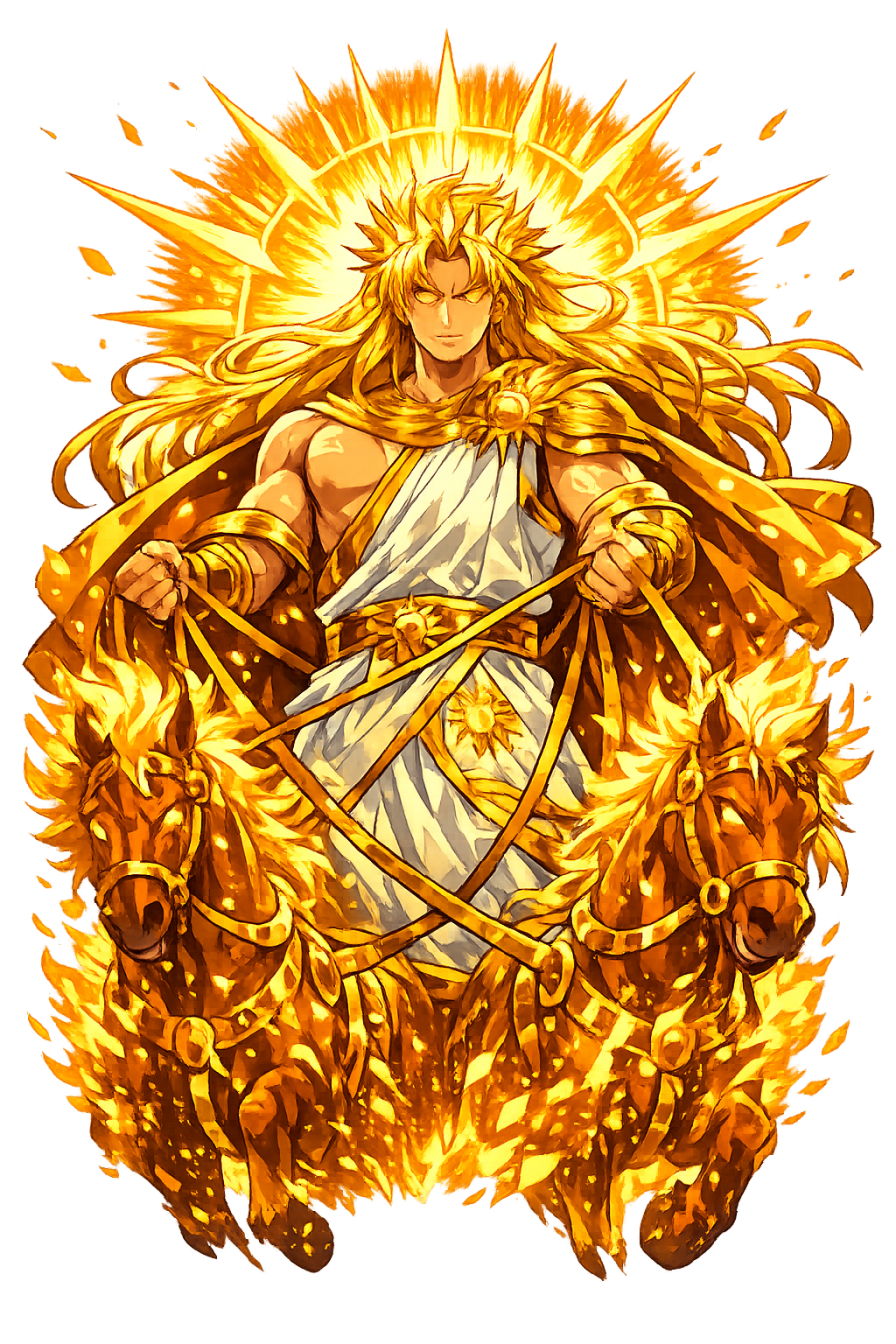
The Authentic Orthography
God of the Sun · The All-Seeing · Witness of Oaths
Why hēlios.com is the correct form
Ἥλιος
The name in its original Attic Greek form. A three-syllable nominative with rough breathing on the eta, carrying the full radiance of the Proto-Indo-European root *sóh₂wl̥, the ancestral word for the sun itself.
HELIOS
Stripped of its Greek identity, the name was reduced to six Latin letters. Solar companies claimed it. The god was buried beneath energy brands, software libraries, and space agencies. The original was forgotten.
Hēlios
The macron on the ē restores the length of the original eta. This is not decoration — it is philological accuracy. The domain encodes to Punycode, but the browser displays the truth.
hēlios.com → xn--hlios-iza.com
The non-ASCII character ē (U+0113) is encoded while the ASCII remains visible. To the DNS, it is Punycode. To humanity, it is Hēlios.
How the Sun was truly spoken
Domains, symbols, and divine radiance
Hēlios is not merely a god. He is the celestial fire itself — the eye that sees all, the wheel that turns the day, the witness before whom no oath can be broken. Born of the Titan Hyperion and the goddess Theia, he is the brother of Selēnē the Moon and Eos the Dawn. Every morning he rises from the Ocean, climbs the sky in his golden chariot, and descends at evening into the western sea. He is the last thing the dying see and the first thing the newborn know.
The celestial body itself — the fire that warms, illuminates, and measures the day. Hēlios does not merely drive the sun. He is the sun.
From his chariot, Hēlios sees everything that happens on earth. He witnessed the abduction of Persephonē. No deed escapes his gaze.
As the eternal witness, Hēlios is invoked in oaths. To swear by the sun is to bind oneself to an unbreakable contract — he sees, he remembers, he judges.
The golden chariot drawn by four or seven horses. Its journey across the sky is the passage of day itself — rise, zenith, descent, return.
Stories of fire, pride, and consequence
Hēlios was born to Hyperion, the Titan of light, and Theia, the goddess of sight. His sister was Selēnē, the Moon, and his brother was Eos, the Dawn. From the moment of his birth, he was destined to drive the chariot of the sun across the sky — a duty so immense that no other god could bear it. Each morning, Eos opens the gates of dawn with her rosy fingers, and Hēlios emerges from the Ocean, climbing into his golden chariot to begin his daily journey.
Phaethon, the son of Hēlios and the Oceanid Clymene, was mocked by his peers for claiming divine parentage. He traveled to the palace of the sun and begged his father for proof of his lineage. Hēlios, bound by a rash oath sworn on the River Styx, granted any wish. Phaethon asked to drive the solar chariot for one day. Hēlios tried to dissuade him — the horses were wild, the path treacherous — but the boy would not relent. Phaethon lost control. The chariot scorched the earth, turning Libya to desert and boiling the rivers. Zeus struck him down with a thunderbolt to save the world. Hēlios, in grief, refused to drive the chariot for a day. The earth went dark.
On the island of Thrinacia, Hēlios kept seven flocks of cattle and seven herds of sheep — sacred animals, never to be touched. When Odysseus and his crew were becalmed on the island, his men grew desperate. Despite Odysseus's warnings, they slaughtered the cattle. Hēlios saw it all from his chariot. He demanded vengeance from the gods. When Odysseus finally sailed, Zeus destroyed his ship with a thunderbolt. All the crew perished. Only Odysseus survived, clinging to the wreckage, paying the price for the sacrilege against the sun.
Hēlios is the eternal witness. He sees every oath sworn in his light, every promise made beneath his gaze, every betrayal committed in the open day. When Medea swore her terrible oath of vengeance, she swore by Hēlios — her own grandfather. When Demeter demanded justice for Persephonē's abduction, it was Hēlios who confirmed what he had seen from his chariot. To swear by the sun is to bind oneself to an absolute truth — for the sun never forgets, and the sun never lies.
Hēlios is the sun that names the shadows. Athēnā has strategy. Árēs has fury. Apollon has prophecy. But Hēlios has the final word — the light that reveals what the others would hide. He is the last speaker, the true narrator, the god who writes the epilogue. His sister Selēnē lights the night. His brother-in-law Zeus rules the sky. But Hēlios is the sky.
This is not a directory. This is a resurrection.
Enter the Lexicon